An ultra-modern EPS twin fin, measured against what I ordered
Updated 2026-09-19

| Length | 6'9" |
|---|---|
| Width | 21 in |
| Thickness | 3 in |
| Volume | 48.5 L |
| Fin config | Twin |
| Top speed | 28.1 km/h |
| Wave range | 1 to 7 ft |
A board delayed by a month, then two weeks, then another week finally turned up, and the first job on pickup day was not surfing it. It was checking, with calipers and a straight edge, whether it actually matched what was ordered.
What Exo Flex construction actually means
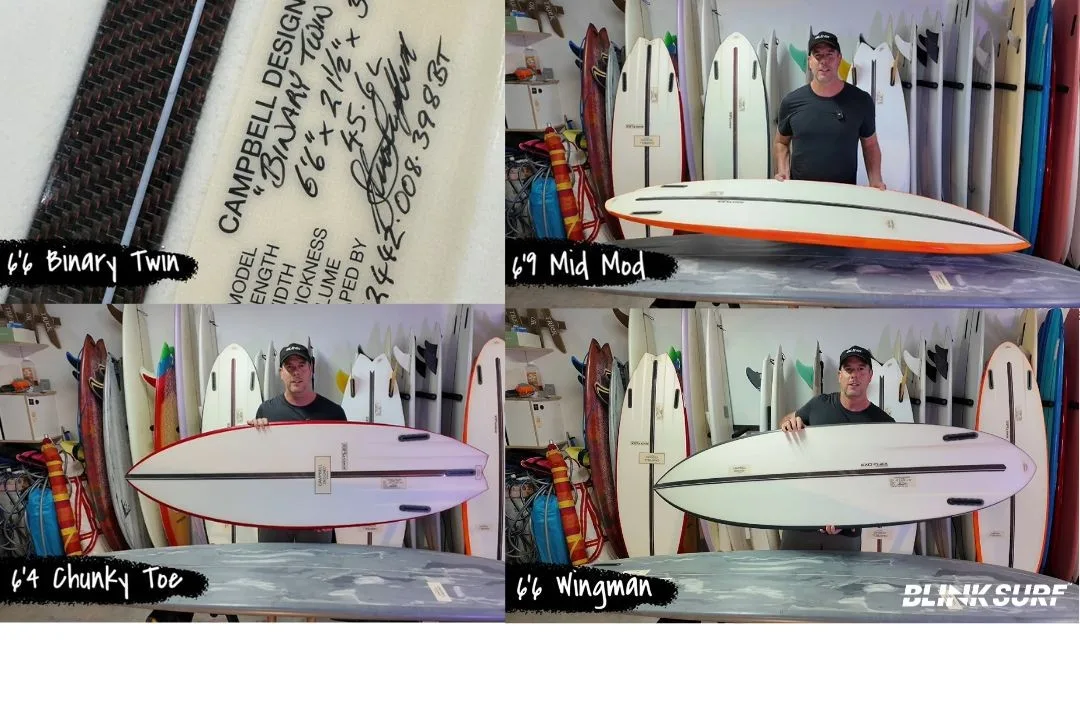
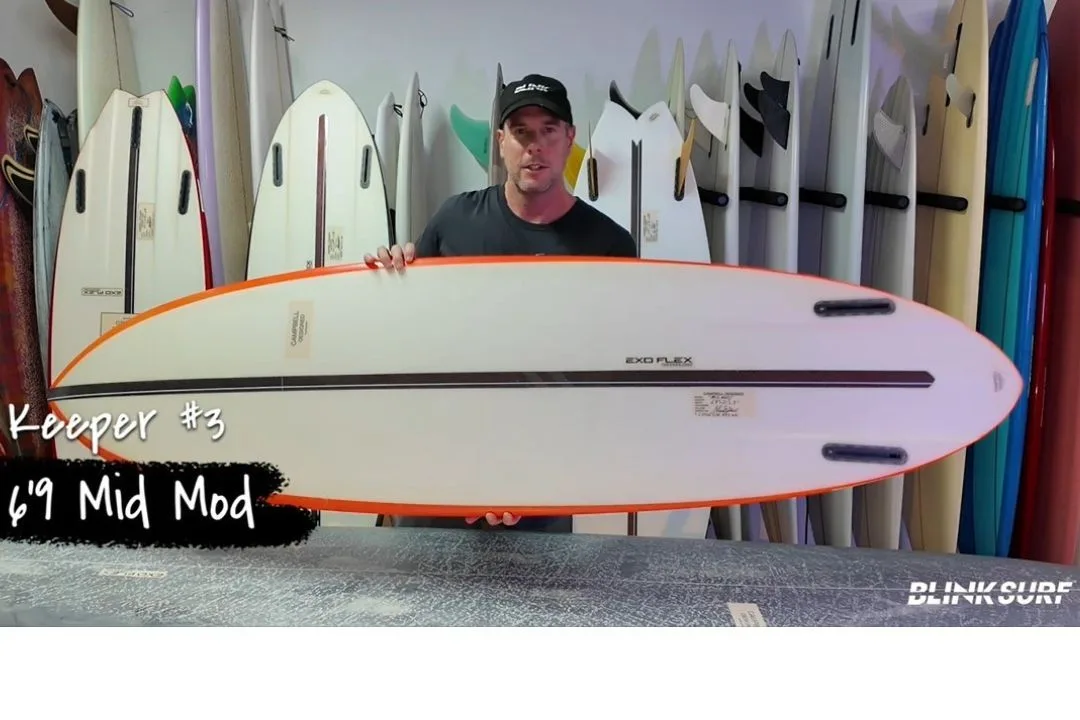
This is a rounded pin tail twin fin built in EPS by Campbell Designed in Noosa, Australia, using their Exo Flex construction: a carbon strip running down each rail like a leaf spring, replacing a wooden stringer entirely. It is not as heavy as a PU board and not as light and bouncy as a cheap foam-and-glass EPS build, which is the balance that makes it worth the wait. The finish carries a bright orange rail, purely a paint job rather than structural carbon, easy to spot in a lineup photo.
How it compares to the board it replaces
The previous board in this size range was 7'4 and 21.5 to 22 inches wide. This one is narrower at 21 inches, with the nose pulled in a little more for paddling into steeper waves, and a rounded pin tail carrying a small channel for grip. Narrower generally means less outright speed and more control, and that tradeoff is the point of ordering a second board in a similar family rather than a repeat of the first.
Checking the build against the order
Measured with an E-Z Square Pro, the board came in at exactly 3 inches thick and 21 inches wide, both matching the order precisely. The tail measured 15 inches, nearly identical to the nose width, which is what makes this such a genuinely eggy outline: nose and tail reading almost the same top to bottom. Every Campbell Designed board ordered so far has measured up exactly as specified, which is not something every custom order manages.
What the bottom shape suggests about how it will surf
Running a straight edge from nose to tail shows a flat, slightly rolled entry that stays rolled well past the midpoint, then picks up vee right around the fin area, helped by a single channel that creates a double-concave-like jet effect with a rolled vee pivot point at the exit. Because the center of the board sits lower than the rails along its whole length, it should turn rail to rail easily, even if it does not plane onto a wave quite as fast off the mark as a flatter board would.
How it actually performed
Once in the water, this board justified the numbers. It has since produced a 179 metre wave at 28.1 km/h (17.5 mph), across a wave range from one to seven feet, which is a genuinely wide spread for a 48.5 litre EPS twin fin. It suits any wave I have put it in, which is exactly what the narrower, more pulled-in nose over the previous 7'4 was meant to buy.
Why pickup-day measuring matters more than it sounds
A board this specific, built to replace a slightly wider, longer predecessor rather than to fill a gap in the quiver, only earns its place if it actually delivers the narrower, more controlled feel it was ordered for. Confirming the numbers on pickup day, before a single wave, is what turns "it should paddle and turn differently" into a fact rather than a hope. Since then, the numbers from that first afternoon with the calipers have held up: a board that turns easily rail to rail, at a genuine cost in outright acceleration off the mark, exactly as the bottom contour promised when it was still dry on the rack.
What I would check again on the next order
The next time I order from this shaper, the checklist stays the same: thickness with calipers, width at the wide point and the tail with a tape, and a straight edge along the bottom before the board ever touches water. It takes a few minutes and it has never once found this shaper short of what was ordered, which says as much about them as it does about the habit of checking. A board that measures true on day one is a board you can trust to behave the way its numbers suggest once you are actually riding it, rather than hoping the description matched the outcome.
Questions people ask
What is Exo Flex construction on a surfboard?
A carbon strip built into each rail in place of a wooden stringer, giving strength and a livelier flex than a standard PU or basic EPS build.
Does a narrower nose make a twin fin slower?
It can reduce outright speed off the mark, but it usually buys more control and easier paddling into steeper takeoffs, which is the tradeoff this board was ordered for.
How do you check a custom surfboard matches what you ordered?
Calipers for thickness, a tape for width at the nose, tail and wide point, and a straight edge along the bottom to check rocker and concave against what was specified.
What wave range does an EPS twin fin like this handle?
This one has covered one to seven feet, wider than its 48.5 litre volume alone would suggest.
For more on EPS versus PU construction generally, see EPS or PU surfboard, and for the fin choices that suit a channel-and-vee bottom like this one, twin fin fins explained. The wider case for ordering a custom board built exactly to your own numbers is in I've ordered over 50 custom surfboards and custom or stock surfboard. This board is part of my current quiver.