A Custom Twin Pin That Paddles Better Than It Should
Updated 2026-09-19
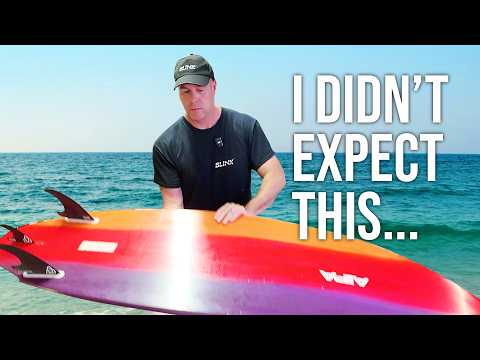
| Length | 6'2" |
|---|---|
| Width | 20 3/4 in |
| Thickness | 2 15/16 in |
| Volume | 37.93 L |
| Fin config | Twin |
| Top speed | 27 km/h |
| Wave range | 1 to 4 ft |
A board that paddles better than its own volume suggests is rare enough to go back to the shaper and ask why. This 6'2 3/4 x 20 3/4 x 2 15/16 twin fin, hand made in Hawaii and carrying real family surf history in its outline, does exactly that at just 37.93 liters. As at October 2025, here is what makes it work, six years and roughly a dozen sessions in.
Where the shape comes from
This board comes from a Hawaiian shaping family whose earlier generation helped develop the twin fin in its early years, and it carries a bump squash tail from a template that later influenced other well-known modern outlines. The board is set up as a twin plus one, a twin fin with a small trailer fin added behind the two main fins, rather than a straight twin.
How it was actually ordered
There was no local shop involved in getting this board. A post from the shaper, saying anyone who got in touch could get a board made, led to a direct back-and-forth, and the finished board eventually arrived by an unusual route: picked up from a flight steward at the airport, who had carried it over packed in a board bag. It was made in September 2019, which puts it at six years old now.
Why it paddles better than the numbers suggest
At 37.93 liters, this is a genuinely low-volume board for its length, and by most rules of thumb it should paddle like one. It does not, and the most likely reason is the rocker. A straight edge shows a clear kick in the nose, enough to lift over whitewater cleanly, paired with a similar flip at the tail. That curve at both ends, on a nose that is otherwise fairly narrow, is unusual enough that it prompted a direct message back to the shaper just to confirm the paddling really was as good as it felt.
The bottom shape
Running a straight edge down the board shows a flat start easing into a very mild single concave that holds all the way down to the fins. The double concave most boards show earlier only begins right at the back of this one, finishing in a vee out through the tail. That late transition is part of what keeps the nose area so forgiving to paddle while still letting the tail hold and release through a turn.
Fins and a tail pad
A performance-oriented nose was reason enough to fit a tail pad when this board was new, though a rider who has since moved away from tail pads on most boards would likely skip that today. Current fin setup runs an NVS C-Drive, chosen specifically to try a trailer fin on a board not normally ridden with one. It has less surface area than a lot of twin fin setups but holds extremely well, matching the twin plus one configuration the board was built around.
A small piece of surf history
This exact board turns up in early footage of a well known professional surfer's river wave sessions, ridden under a different rider before this one owned it, which is a reminder that a board like this carries more history than just its own log. It looks striking hanging on a wall, but it earns its place doing the opposite: getting ridden.
Questions people ask
Why does a low-volume board sometimes paddle better than expected?
Rocker is usually the answer. A pronounced kick at both the nose and the tail, even on a fairly narrow board, can make paddling feel far easier than the raw liters would suggest.
What is a twin plus one fin setup?
It is a twin fin with a small trailer fin added behind the two main fins, giving some of the hold and drive of a thruster while keeping most of a twin fin's looseness.
Is it worth contacting a shaper directly for a custom board?
Based on this one, yes. A direct approach to a shaper willing to take on new orders can produce a board with more character than most off-the-shelf options, though it usually means a longer wait and a less predictable process than buying in a shop.
Does a late double concave change how a board turns?
On this board, yes. Holding a mild single concave almost all the way to the fins before a short double concave and vee at the very tail keeps the front of the board forgiving while still letting the tail bite through a turn.
Do trailer fins add much to a twin fin setup?
On this board, the NVS C-Drive trailer adds hold without much extra surface area, which suits a twin plus one configuration built specifically around that small third fin.
For other custom twin fins with real shaping history behind them, see which twin pin is best and which type of twin fin is best for you. For fin setups that add a trailer to a twin fin, see do fins make a difference and twin fin fins. For the case on ordering a genuine one-off, see custom or stock surfboard. This board's full record is on the sold list.