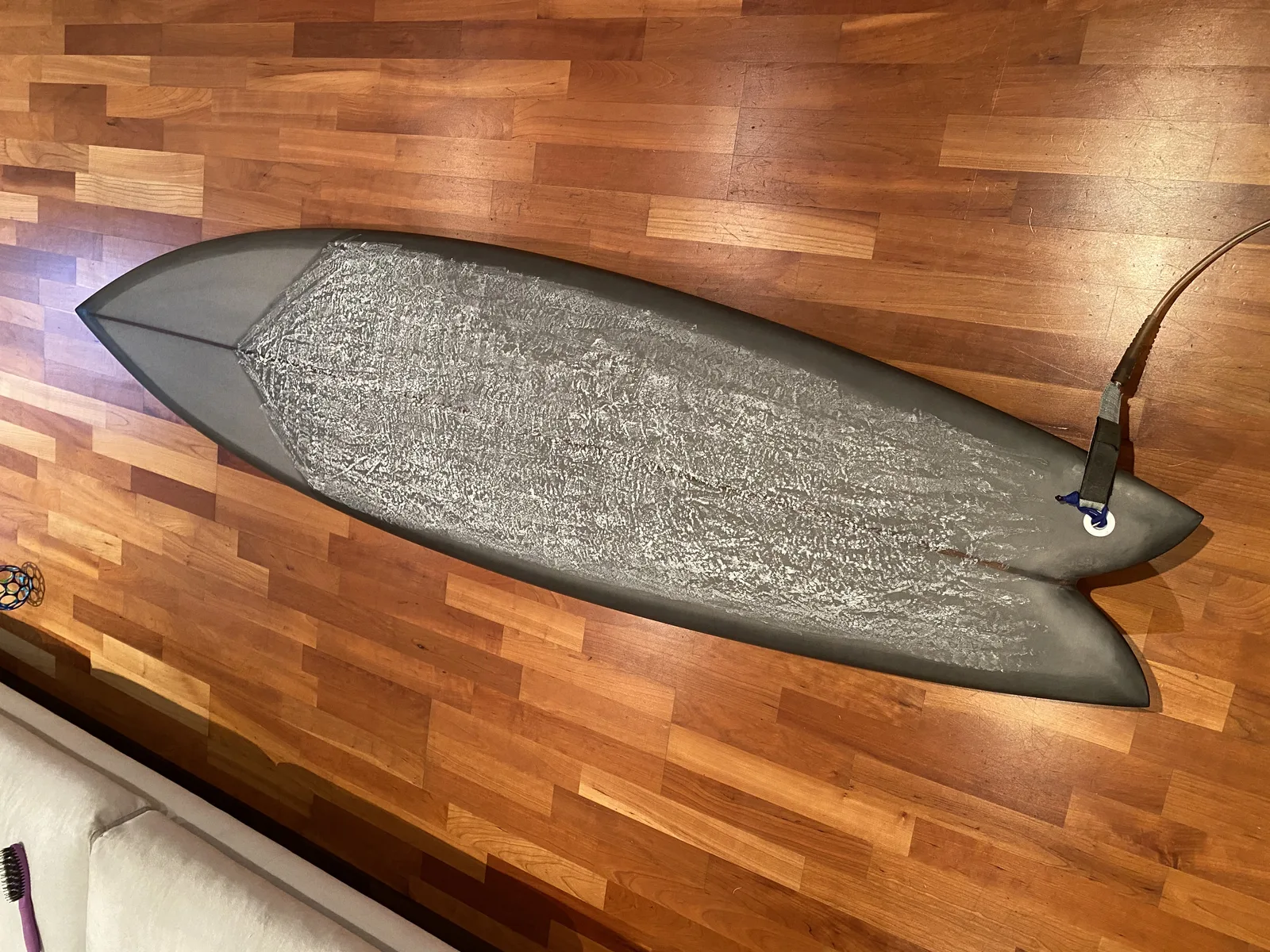
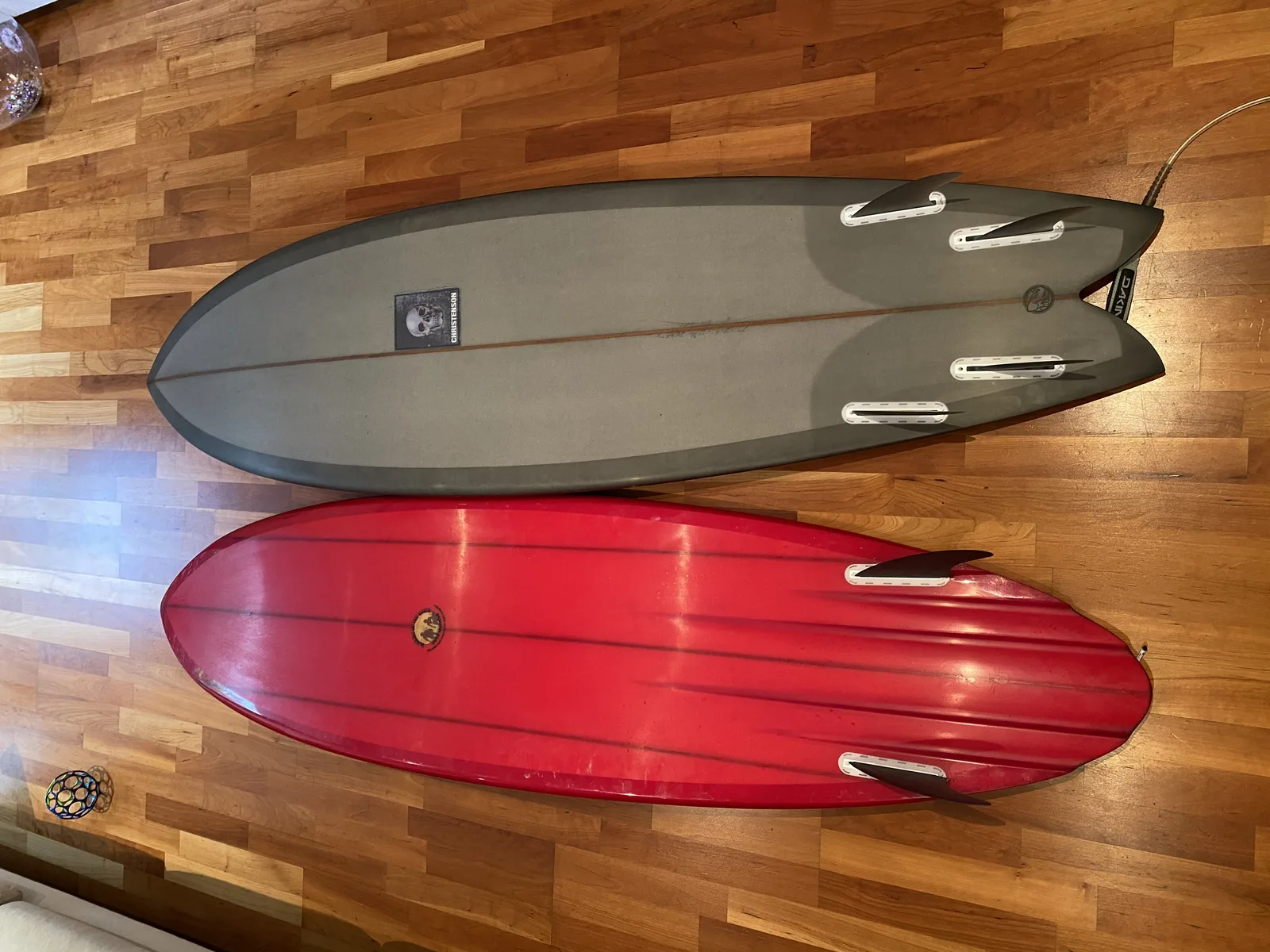
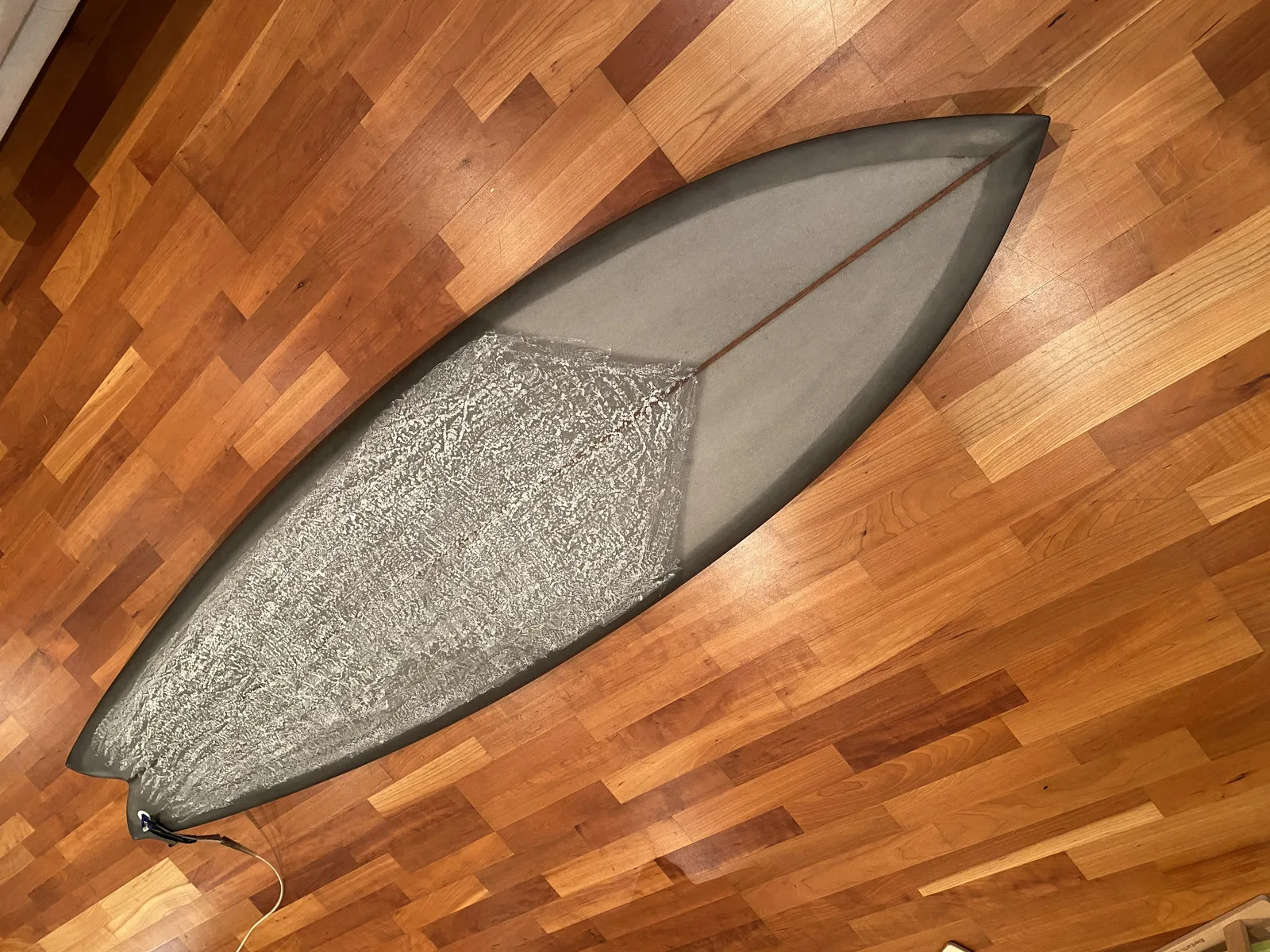
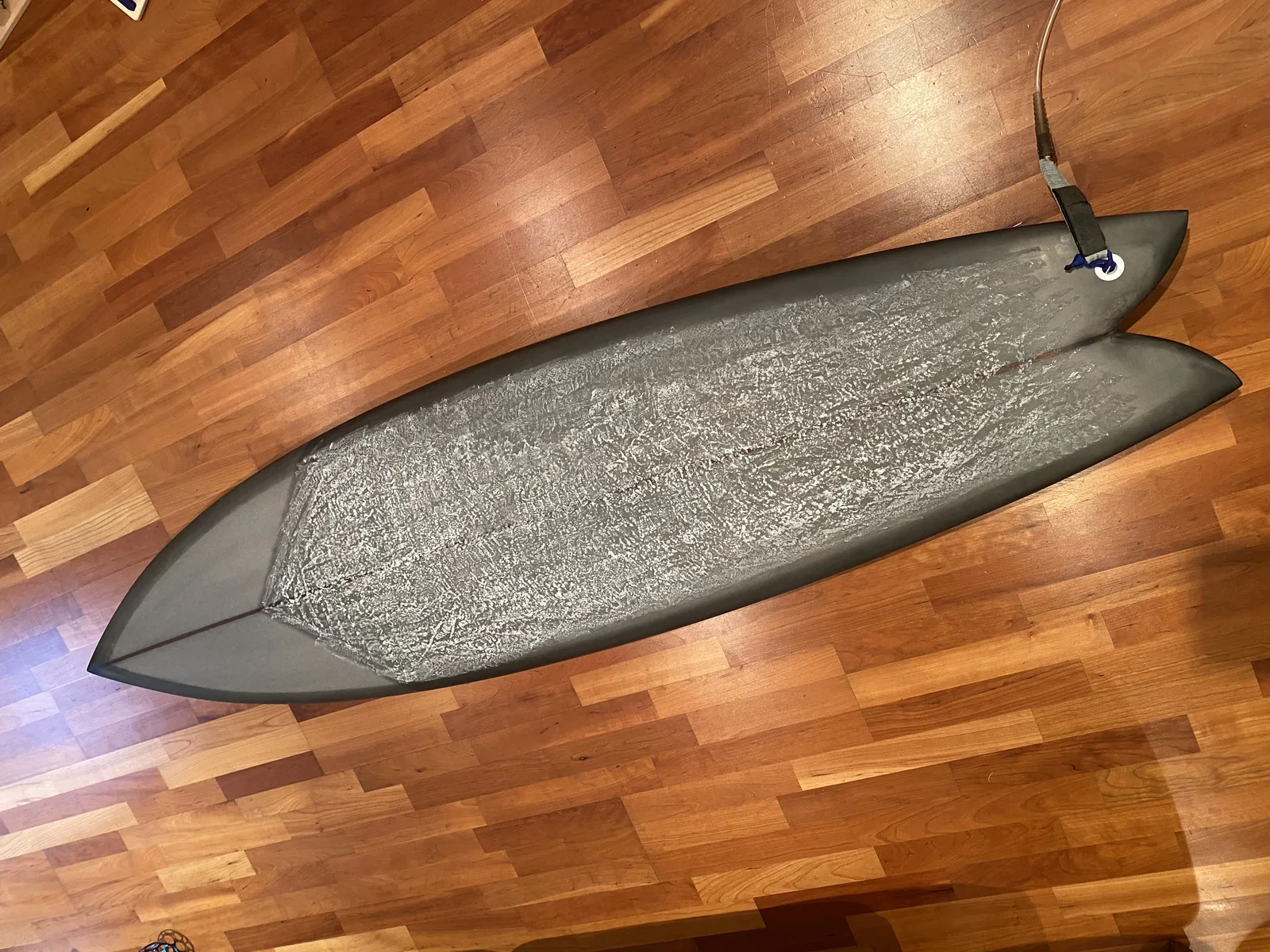
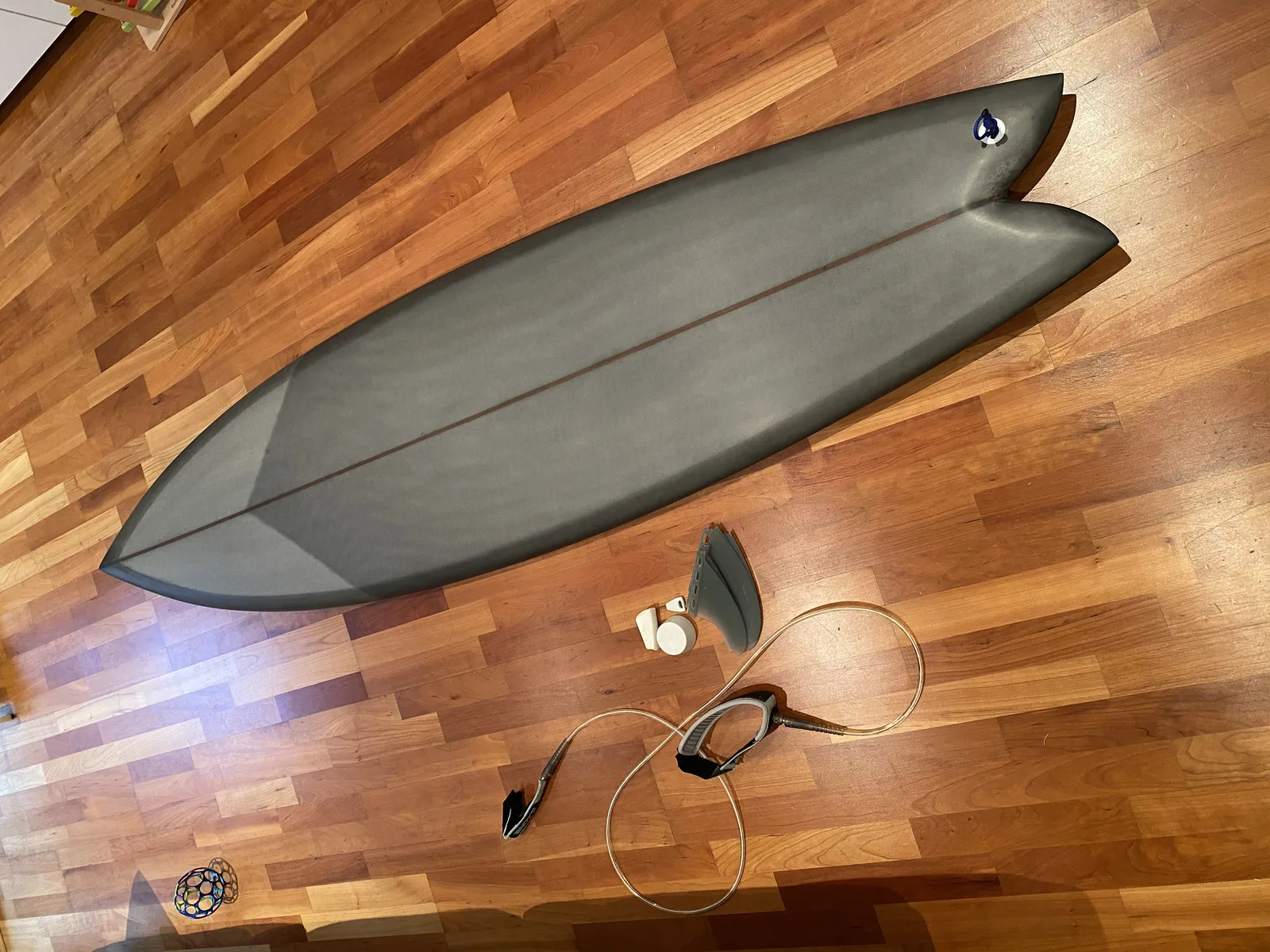
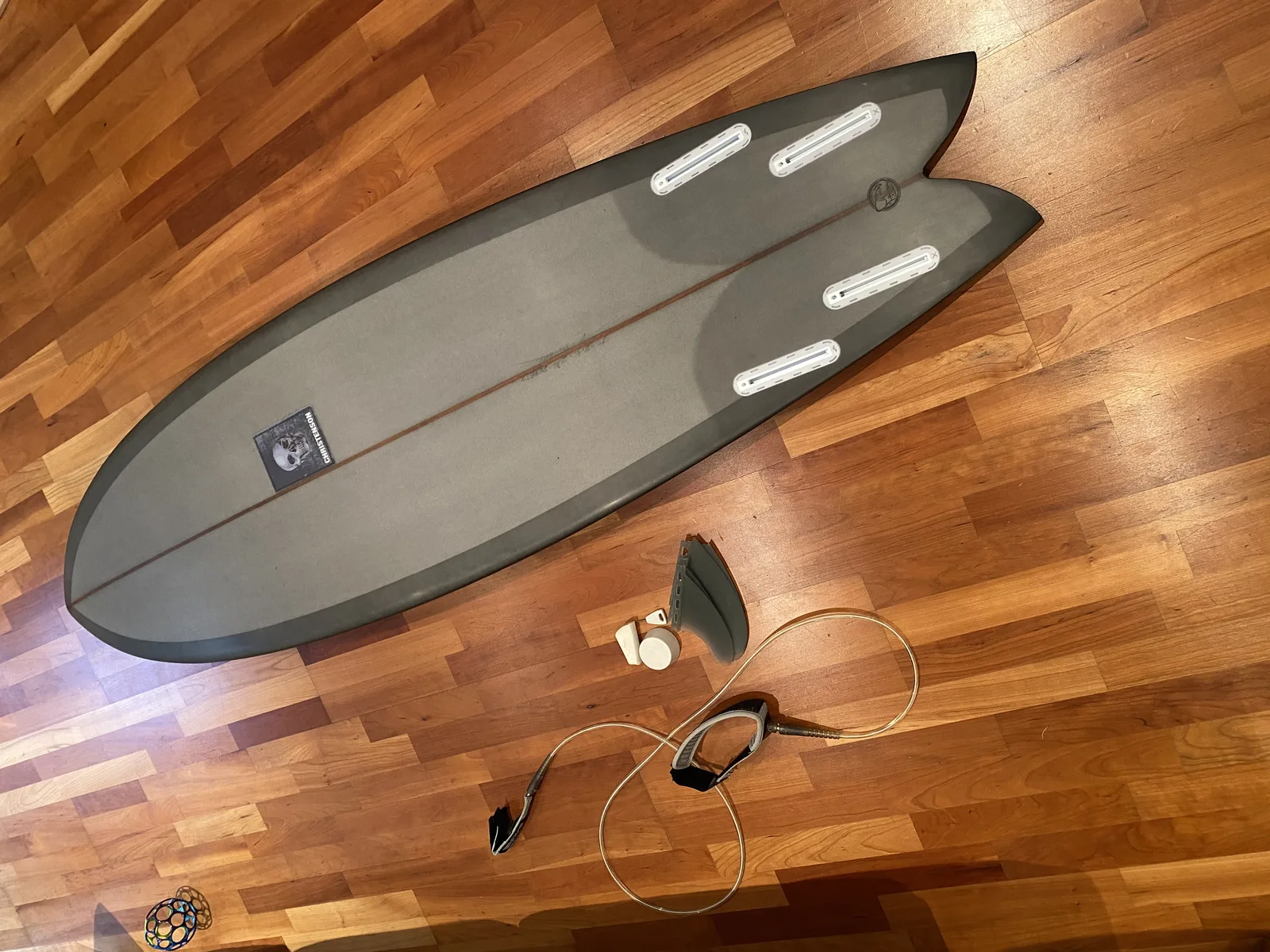
Christenson Nautilus 7'0 review: a versatile quad beaten by three boards
Updated 2026-09-19

| Length | 7'0" |
|---|---|
| Width | 21 1/4 in |
| Thickness | 2 3/4 in |
| Volume | 44 L |
| Fin config | Quad |
| Top speed | 27.6 km/h |
| Wave range | 1 to 7 ft |
The Christenson Nautilus 7'0 is a versatile quad fish, a genuinely well-made board that still ended up sold, not because of any flaw, but because three separate boards in the rack each independently did its job better.
What it is and why I bought it
I bought this Nautilus stock in March 2021, a PU board with a curved rocker, hard rails and a full-length double concave with vee, finished with a swallow tail, running a quad setup. At 21 1/4 inches wide and 44 litres over 7'0, it needed some push to come alive, described in the register as versatile but requiring push rather than working in the smallest surf.
How it surfed
Its best wave came at a spot called Nationals, at a top speed of 27.6 km/h (about 17.1 mph) over a 164 metre ride, using True Ames or Hayden Shapes fins. The shaping pedigree behind it showed up clearly under foot, with the vee-double-concave bottom rocking smoothly from rail to rail. What eventually ended its run was not a fault of its own: a Channel Islands Mid Twin, an SMTH Grande and a Simon Shapes Quegg each separately covered what the Nautilus did, and each proved easier to reach for day to day, making this the hardest of several boards to let go for that reason alone. One factory detail also mattered: a Nautilus built and glassed overseas came out noticeably lighter than a locally glassed equivalent, a difference heavy glassing can visibly change on a board like this.
Who it suits and who it does not
A versatile, semi-step-up quad like this suits someone who wants a genuinely well-built board for waves with a bit of push, and who is not already covered by two or three overlapping boards elsewhere in a rack. It is a weaker choice for someone building a smaller, tightly curated quiver where duplication is the thing being avoided, which is exactly the reason this one moved on. The logged wave range is 1 to 7 ft, ideal at 4 ft.
What happened to it
It sold on 10 May 2026 for $780, against a $1,450 purchase cost.
Questions people ask
Why was the Christenson Nautilus sold if it was a good board?
Not because of any flaw in the board itself. Three other boards in the rack, a Channel Islands Mid Twin, an SMTH Grande and a Simon Shapes Quegg, each independently covered the same job and were easier to reach for, so the overlap made the Nautilus redundant.
What fins worked on the Nautilus?
True Ames or Hayden Shapes fins are logged as the setup on this board.
Does where a board is glassed matter?
In this case, yes. A Nautilus glassed overseas came out noticeably lighter than an equivalent glassed locally, a real difference in how the finished board felt and rode.
For the full spec sheet, see the sold boards list. For the boards that replaced its job in the rack, see the Channel Islands Mid Twin, the SMTH Grande and the Simon Shapes Quegg. For the wider story behind sales like this, see the purge.